2025 AMA Research Challenge – Member Premier Access

October 22, 2025

Virtual only, United States

Would you like to see your presentation here, made available to a global audience of researchers?
Add your own presentation or have us affordably record your next conference.

Background

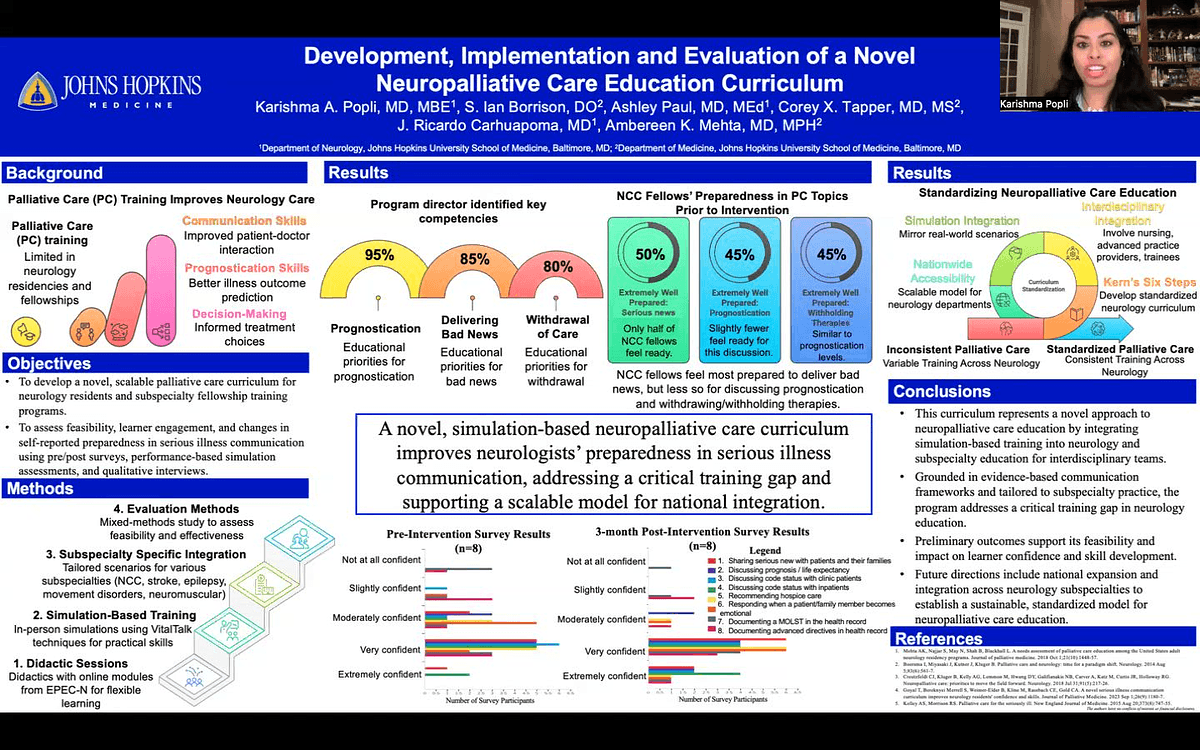
Neurologic illnesses often involve high symptom burden, complex prognostication, and emotionally charged decision-making, making palliative care (PC) skills essential for neurologists. Despite national recommendations, formal training in neuropalliative care remains limited in neurology residencies and fellowships. A prior needs assessment revealed that only 4.5% of U.S. neurocritical care (NCC) fellowship programs had faculty with formal PC training, and many fellows felt underprepared in communication, prognostication, and discussions surrounding life-sustaining treatments. The objective of this study was to develop a novel, scalable palliative care curriculum for neurocritical care fellows that is being expanded across neurology residency and subspecialty fellowship training programs. We aimed to assess feasibility, learner engagement, and changes in self-reported preparedness in serious illness communication using pre/post surveys, performance-based simulation assessments, and qualitative interviews.

Methods

We piloted a novel, interdisciplinary neuropalliative care curriculum for NCC fellows over three academic years (2022–2025), combining asynchronous didactics from the Education in Palliative and End-of-Life Care for Neurology (EPEC-N) curriculum with in-person, simulation-based training using VitalTalk techniques. Simulation scenarios were collaboratively developed and vetted by neurocritical care and palliative care faculty to reflect realistic, frequently encountered clinical experiences. Building on the success of this pilot, we are expanding the curriculum to neurology residency and fellowship training across subspecialties. Using Kern’s Six-Step Curriculum Development framework and situated learning theory, we created subspecialty-specific simulation scenarios (e.g., stroke, epilepsy, movement disorders), integrated into an academic neurology curriculum. A prospective, mixed-methods study was used to evaluate the program’s feasibility, effectiveness, and impact.

Results

Preliminary results from the pilot program demonstrate high learner engagement and improved self-reported preparedness in serious illness communication. Fellows reported increased confidence in delivering bad news, discussing prognosis and code status, and managing emotional conversations with families. Program directors identified key competencies, including prognostication (95%), delivering bad news (85%), and discussions on withdrawal of care (80%), as educational priorities. Evaluation tools included pre/post surveys, simulation performance assessments, and qualitative interviews. Data collection and analysis are ongoing.

Conclusion

This curriculum represents a novel approach to neuropalliative care education by integrating simulation-based training into neurology and subspecialty education for interdisciplinary teams. Grounded in evidence-based communication frameworks and tailored to subspecialty practice, the program addresses a critical training gap in neurology education. Preliminary outcomes support its feasibility and impact on learner confidence and skill development. Future directions include national expansion and integration across neurology subspecialties to establish a sustainable, standardized model for neuropalliative care education.

Downloads

Transcript English (automatic)

Next from 2025 AMA Research Challenge – Member Premier Access

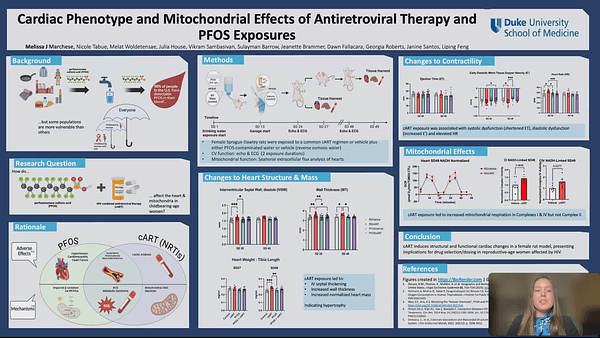
Cardiac Phenotype and Mitochondrial Effects of Antiretroviral Therapy and PFAS Exposures

Cardiac Phenotype and Mitochondrial Effects of Antiretroviral Therapy and PFAS Exposures

2025 AMA Research Challenge – Member Premier Access

Melissa Marchese
Melissa Marchese

22 October 2025