2025 AMA Research Challenge – Member Premier Access

October 22, 2025

Virtual only, United States

Would you like to see your presentation here, made available to a global audience of researchers?
Add your own presentation or have us affordably record your next conference.

Background

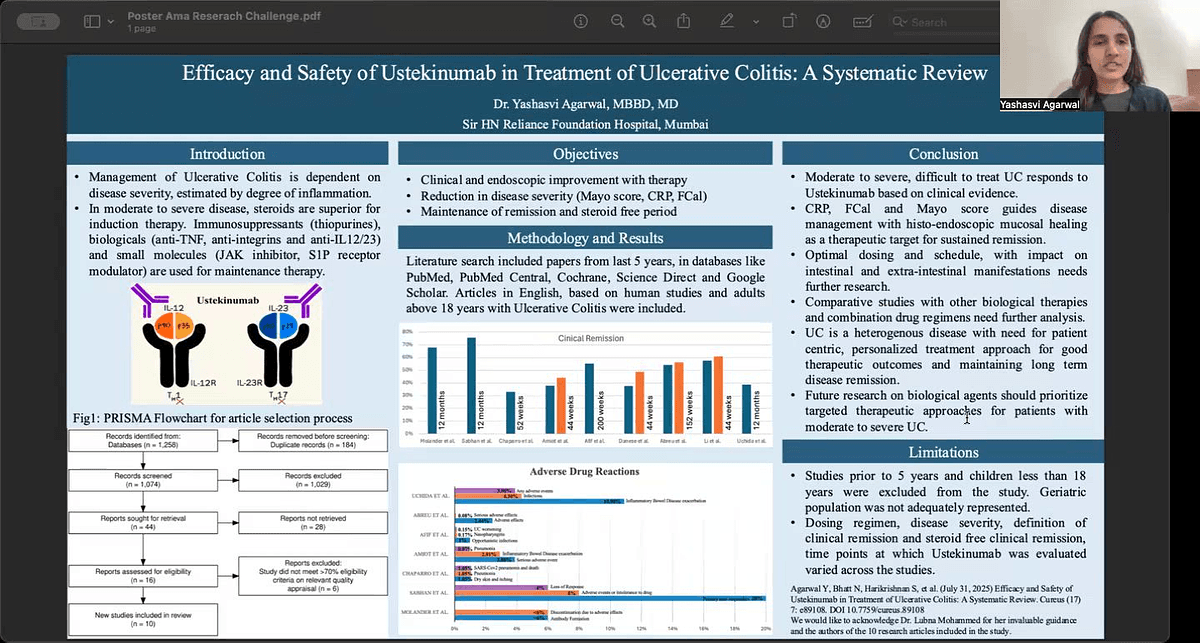
Ulcerative colitis (UC) is a chronic, relapsing and remitting immune mediated condition requiring long-term therapy. Moderate to severe disease is managed using steroids, sulfasalazine, thiopurines, biologicals (anti-tumor necrosis factor, anti-integrins and anti-interleukin IL 12/23) and small molecules (Janus kinase inhibitors, sphingosine-1-receptor modulators). Ustekinumab (UST) is a IgG1 monoclonal antibody acting on IL 12/23 recently authorized to treat moderate to severe UC that is not responsive to other biologic medicines. There remains an unmet need in management of UC despite growing availability of therapeutic agents. Current treatment algorithms use a standard approach for all patients, but targeted therapies are required for better outcomes. This study's goal is to determine the safety and effectiveness of UST therapy in moderate to severe UC. We also noted the clinical and endoscopic improvement with maintenance of clinical and steroid free remission across multiple databases to strengthen reproducibility.

Methods

This systematic review followed the Preferred Reporting Items for Systematic Review and Meta Analysis (PRISMA) 2020 guidelines. Relevant literature was retrieved from PubMed, PubMed Central, Cochrane Library, Science Direct and Google Scholar. Articles published in English within the last 5 years (2020 to 2025) were included. Quality assessment tools were applied to ensure the quality of evidence-based medicine that will be utilized to develop a conclusion and direct future review.

Results

The studies analysed showed a superiority of UST in induction and maintenance of remission in active, difficult to treat UC. Our findings indicate that reduction in Mayo score with improvement in C-reactive protein (CRP) and fecal calprotectin (fCal) can be used to assess a reduction in inflammatory burden and response to treatment. Histo-endoscopic mucosal healing also provides a long-term clinical assessment of reduction in disease burden. All safety events which led to drug discontinuation and malignancy were similar for UST therapy and placebo.

Conclusion

UST as a treatment option for moderate to severe UC can provide an alternative avenue in development of patient centric targeted therapies. Further research targets should include formulation of a standard dosing regimen and evaluation of long-term safety profile of the drug. There also remains an unmet need in comparative analysis of UST treatment with other available therapeutic options, especially biologic agents and effect on extra-intestinal manifestations.

Downloads

Transcript English (automatic)

Next from 2025 AMA Research Challenge – Member Premier Access

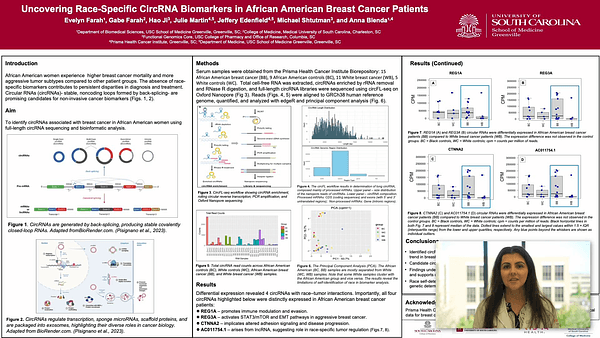
Uncovering Race-Specific CircRNA Biomarkers in African American Breast Cancer Patients

Uncovering Race-Specific CircRNA Biomarkers in African American Breast Cancer Patients

2025 AMA Research Challenge – Member Premier Access

Evelyn Farah

22 October 2025