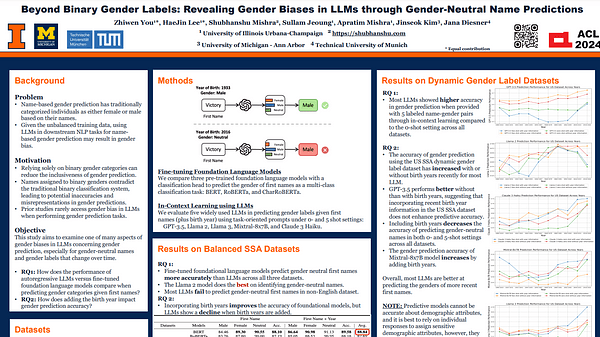
We conducted two experiments to better understand how comprehenders use probabilistic knowledge of the associations between genders and personal names when inferring the gender of new referents during reading. Personal names are, surprisingly, under-investigated in studies on gender inference compared to role nouns (e.g., 'nurse') despite being strongly connected to gender. In a self-paced reading task involving variably gender-biased names and gendered reflexives, we observe a gender mismatch effect proportional to the incongruence between a name's perceived gender and that of the reflexive. In a novel variant of the Maze task involving forced ambiguity resolution between two gendered reflexives, we find decisions track the perceived gender of names and decisions take longer with more ambiguous names. We interpret the results to support a model in which comprehenders make graded, not categorical, inferences about gender during incremental comprehension, contrary to previous proposals.