2025 AMA Research Challenge – Member Premier Access

October 22, 2025

Virtual only, United States

Would you like to see your presentation here, made available to a global audience of researchers?
Add your own presentation or have us affordably record your next conference.

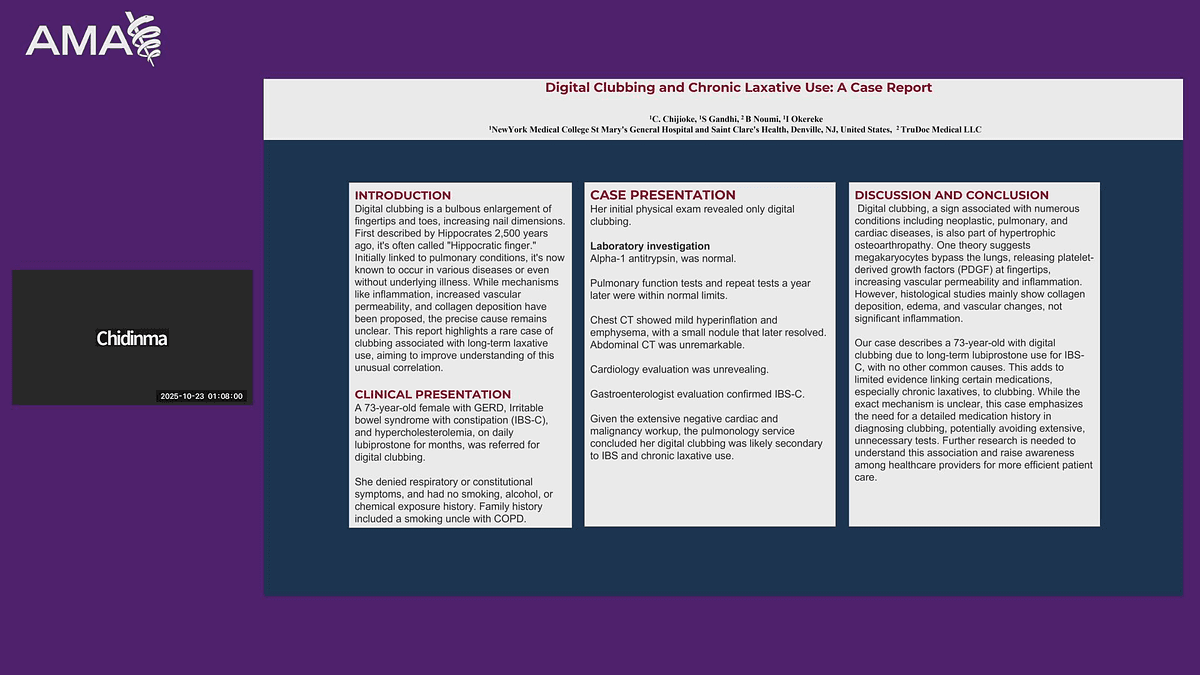
Background Digital clubbing is a bulbous enlargement of fingertips and toes, increasing nail dimensions. First described by Hippocrates 2,500 years ago, it's often called "Hippocratic finger." Initially linked to pulmonary conditions, it's now known to occur in various diseases or even without underlying illness. While mechanisms like inflammation, increased vascular permeability, and collagen deposition have been proposed, the precise cause remains unclear. This report highlights a rare case of clubbing associated with long-term laxative use, aiming to improve understanding of this unusual correlation. Case Presentation A 73-year-old female with GERD, Irritable bowel syndrome with constipation (IBS-C), and hypercholesterolemia, on daily lubiprostone for months, was referred for digital clubbing. She denied respiratory or constitutional symptoms, and had no smoking, alcohol, or chemical exposure history. Family history included a smoking uncle with COPD. Her initial physical exam revealed only digital clubbing. Lab work, including Alpha-1 antitrypsin, was normal. Pulmonary function tests and repeat tests a year later were within normal limits. Chest CT showed mild hyperinflation and emphysema, with a small nodule that later resolved. Abdominal CT was unremarkable. Cardiology evaluation was unrevealing. A gastroenterologist confirmed IBS-C. Given the extensive negative cardiac and malignancy workup, the pulmonology service concluded her digital clubbing was likely secondary to IBS and chronic laxative use. Discussion Digital clubbing, a sign associated with numerous conditions including neoplastic, pulmonary, and cardiac diseases, is also part of hypertrophic osteoarthropathy. Rarely, it's linked to laxative abuse, most often with senna. One theory suggests megakaryocytes bypass the lungs, releasing platelet-derived growth factors (PDGF) at fingertips, increasing vascular permeability and inflammation. However, histological studies mainly show collagen deposition, edema, and vascular changes, not significant inflammation. Our case describes a 73-year-old with digital clubbing due to long-term lubiprostone use for IBS-C, with no other common causes. This adds to limited evidence linking certain medications, especially chronic laxatives, to clubbing. While the exact mechanism is unclear, this case emphasizes the need for a detailed medication history in diagnosing clubbing, potentially avoiding extensive, unnecessary tests. Further research is needed to understand this association and raise awareness among healthcare providers for more efficient patient care.

Downloads

Transcript English (automatic)

Next from 2025 AMA Research Challenge – Member Premier Access

Making Sense of Insensible Losses

Making Sense of Insensible Losses

2025 AMA Research Challenge – Member Premier Access

Christopher Arnold

22 October 2025