Would you like to see your presentation here, made available to a global audience of researchers?
Add your own presentation or have us affordably record your next conference.
Background Ludwig’s Angina is a rapidly progressive and life-threatening cellulitis of the soft tissue of the floor of the mouth and neck. Streptococcal and Staphylococcal species are the most commonly isolated causes. It is treated with securing the airway, broad spectrum antibiotic coverage, and surgical drainage for any abscess or drainable collection of fluid. Sources of infection include dentition, oral procedures, alcoholism, vascular disease, and immunocompromised states. This is a case which was positive for Streptococcus Constellatus with systemic abscess spread and a 45-day ICU course.
Methods Case Report
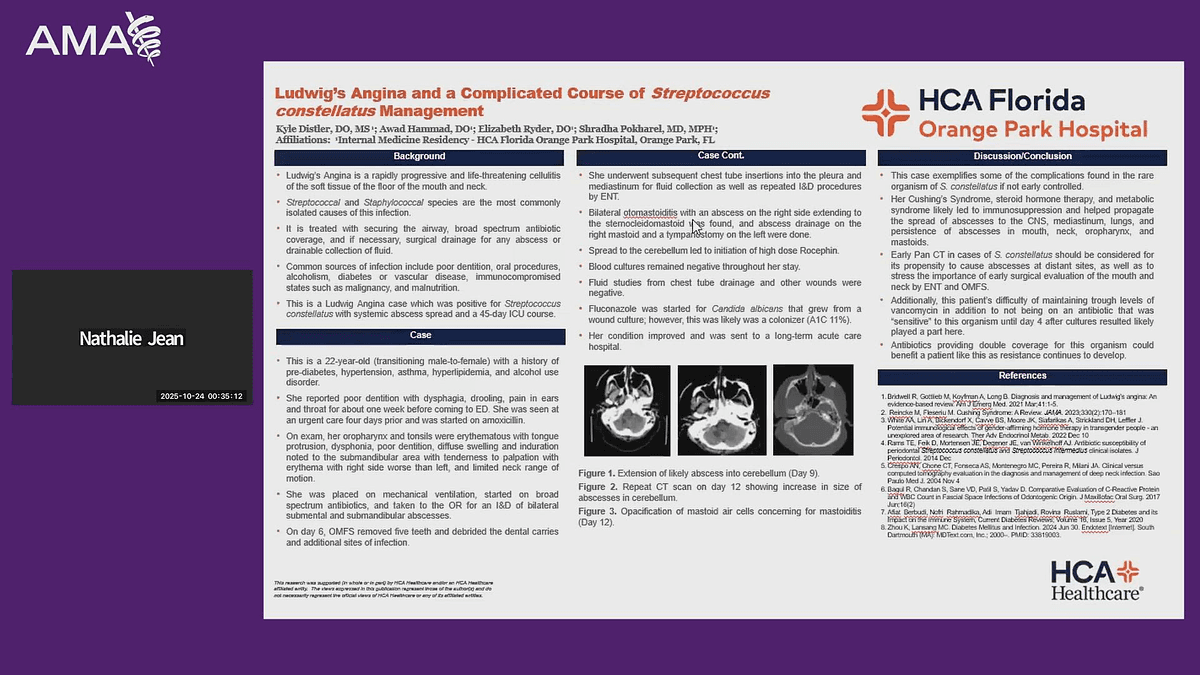
Results This is a 22-year old with diabetes, hypertension, asthma, hyperlipidemia, and alcohol use disorder. She reported poor dentition with dysphagia, drooling, pain in ears and throat for one week before arrival. She was seen at an urgent care four days prior and was given amoxicillin. Her oropharynx and tonsils were erythematous with tongue protrusion, dysphonia, poor dentition, diffuse swelling and induration noted to the submandibular area with tenderness to palpation with erythema with right side worse than left, and limited neck range of motion. She was intubated, started on broad spectrum antibiotics, and taken to the OR for an I&D of submental and submandibular abscesses. On day 6, OMFS removed five teeth. Chest tubes were inserted into the pleura and mediastinum for fluid collection, and repeat I&D procedures for the neck were performed. Abscess drainage on the right mastoid and a tympanostomy on the left were done. Spread to the cerebellum led to initiation of high dose ceftriaxone. Fluid studies from chest tube drainage and other wounds were negative. Her condition improved and was sent to a long-term acute care hospital.
Conclusion This patient’s case shows complications found in Streptococcus Constellatus if not early controlled or immunosuppressed. Her Cushing’s Syndrome, steroid hormone therapy, and metabolic syndrome likely led to immunosuppression. These factors helped propagate the spread of abscesses to the CNS, mediastinum, lungs, and persistence of abscesses in mouth, neck, oropharynx, and mastoids. Early Pan CT in cases of Streptococcus Constellatus should be considered for its propensity to cause abscesses at distant sites, with early surgical evaluation of the mouth and neck. This patient’s difficulty of maintaining trough levels of vancomycin and not being on an antibiotic that was “sensitive” to this organism until day 4 after cultures resulted played a large role. Antibiotics providing double coverage for this organism would benefit patients like this as resistance continues to develop.