Would you like to see your presentation here, made available to a global audience of researchers?
Add your own presentation or have us affordably record your next conference.
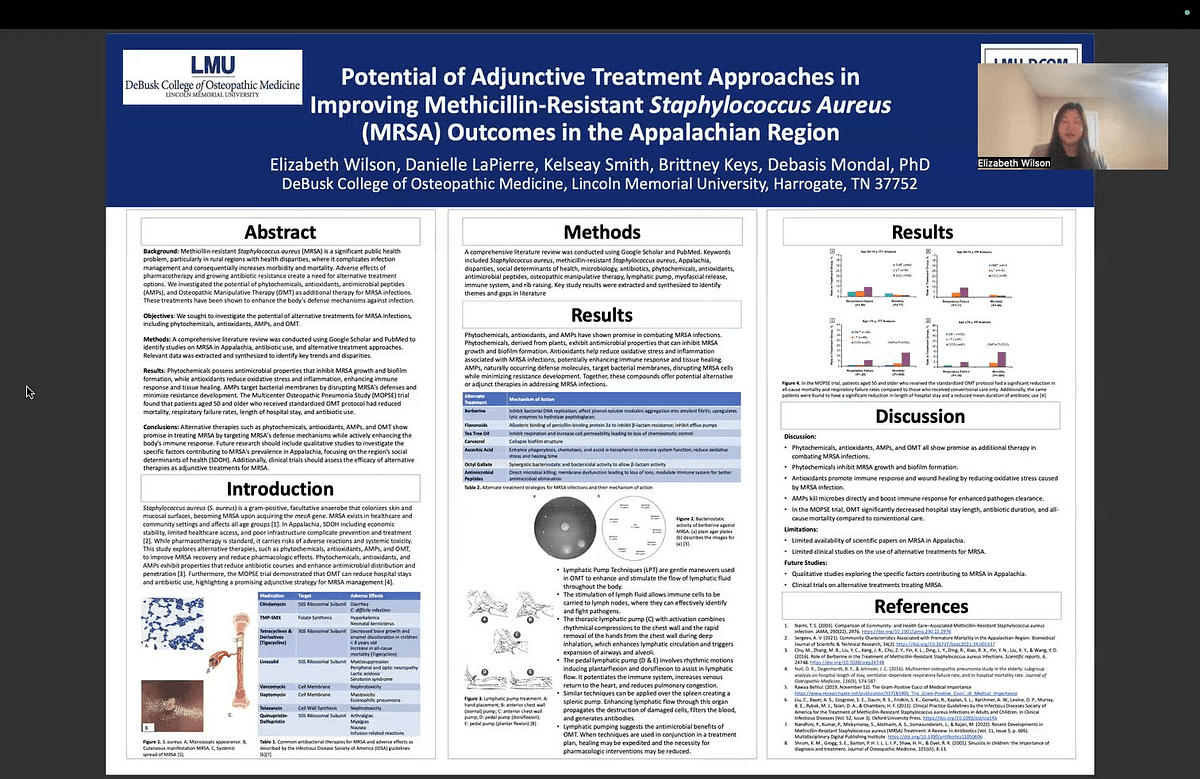
Background: Methicillin-resistant Staphylococcus aureus (MRSA) is a significant public health problem, particularly in rural regions with health disparities, where it complicates infection management and consequentially increases morbidity and mortality. Adverse effects of pharmacotherapy and growing antibiotic resistance create a need for alternative treatment options. We investigated the potential of phytochemicals, antioxidants, antimicrobial peptides (AMPs), and Osteopathic Manipulative Therapy (OMT) as additional therapy for MRSA infections. These treatments have been shown to enhance the body's defense mechanisms against infection.
Objectives: We sought to investigate the potential of alternative treatments for MRSA infections, including phytochemicals, antioxidants, AMPs, and OMT.
Methods: A comprehensive literature review was conducted using Google Scholar and PubMed to identify studies on MRSA in Appalachia, antibiotic use, and alternative treatment approaches. Relevant data was extracted and synthesized to identify key trends and disparities.
Results: Phytochemicals possess antimicrobial properties that inhibit MRSA growth and biofilm formation, while antioxidants reduce oxidative stress and inflammation, enhancing immune response and tissue healing. AMPs target bacterial membranes by disrupting MRSA's defenses and minimize resistance development. The Multicenter Osteopathic Pneumonia Study (MOPSE) trial found that patients aged 50 and older who received standardized OMT protocol had reduced mortality, respiratory failure rates, length of hospital stay, and antibiotic use.
Conclusions: Alternative therapies such as phytochemicals, antioxidants, AMPs, and OMT show promise in treating MRSA by targeting MRSA's defense mechanisms while actively enhancing the body's immune response. Future research should include qualitative studies to investigate the specific factors contributing to MRSA's prevalence in Appalachia, focusing on the region’s social determinants of health (SDOH). Additionally, clinical trials should assess the efficacy of alternative therapies as adjunctive treatments for MRSA.