Would you like to see your presentation here, made available to a global audience of researchers?
Add your own presentation or have us affordably record your next conference.
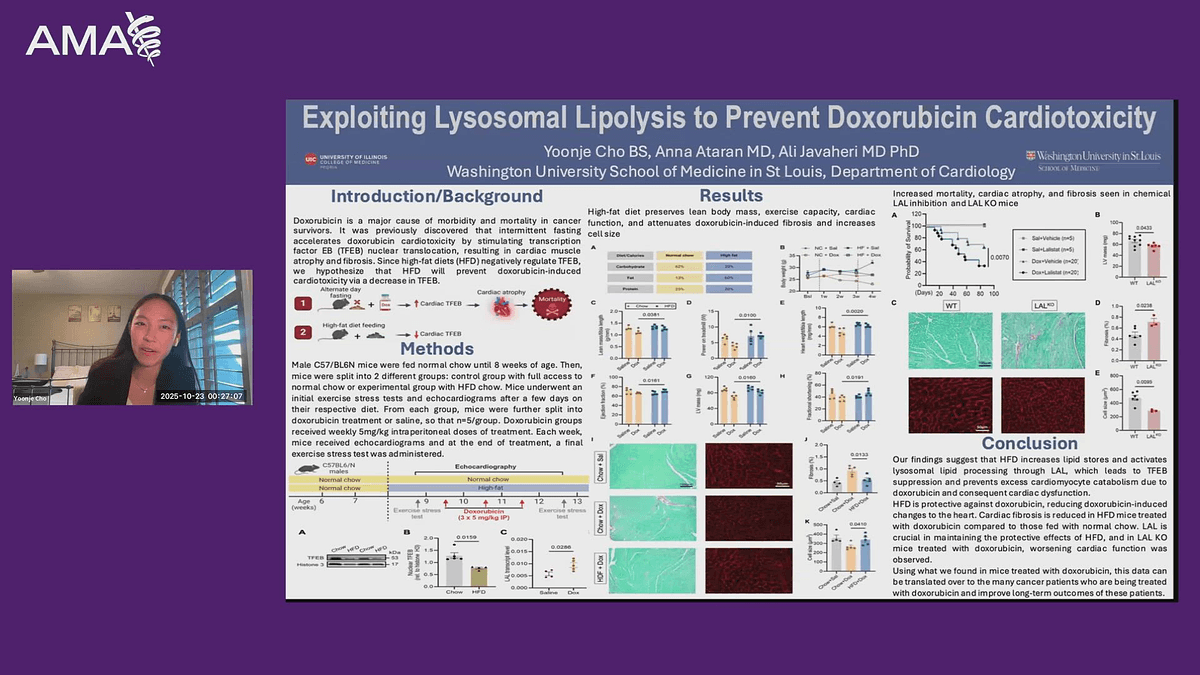
Doxorubicin is an effective chemotherapeutic agent, but its long-term cardiotoxicity contributes substantially to morbidity and mortality, with ~9% of patients developing cardiomyopathy in the years following treatment. Prior studies show that intermittent fasting exacerbates doxorubicin-induced cardiotoxicity by promoting nuclear translocation of transcription factor EB (TFEB), which drives cardiac muscle atrophy and fibrosis. Because high-fat diets (HFD) have been shown to suppress TFEB activity, we hypothesized that HFD could mitigate doxorubicin-induced cardiotoxicity. Male C57BL/6N mice were fed standard chow until 8 weeks of age, were subsequently randomized to standard chow or HFD, and then treated with doxorubicin (5mg/kg intraperitoneally) or saline (n=5/group). On echocardiogram and stress testing, compared with chow-fed mice, HFD-fed mice preserved lean mass, exercise capacity, and cardiac function, with reduced fibrosis and improved ejection fraction, left ventricular mass, and fractional shortening. Mechanistically, doxorubicin increased mRNA abundance of the main lysosomal hydrolytic enzyme, lysosomal acid lipase (LAL), a key regulator of lipophagy. LAL knockout mice showed increased mortality, cardiac atrophy, fibrosis, and enhanced TFEB nuclear translocation. These findings suggest that lipid availability sustains LAL activity, suppresses TFEB, and protects against excess cardiac catabolism. Conclusively, HFD preserved cardiac structure and function during doxorubicin therapy, highlighting a potential translational dietary strategy to reduce cardiotoxicity in human cancer patients.